
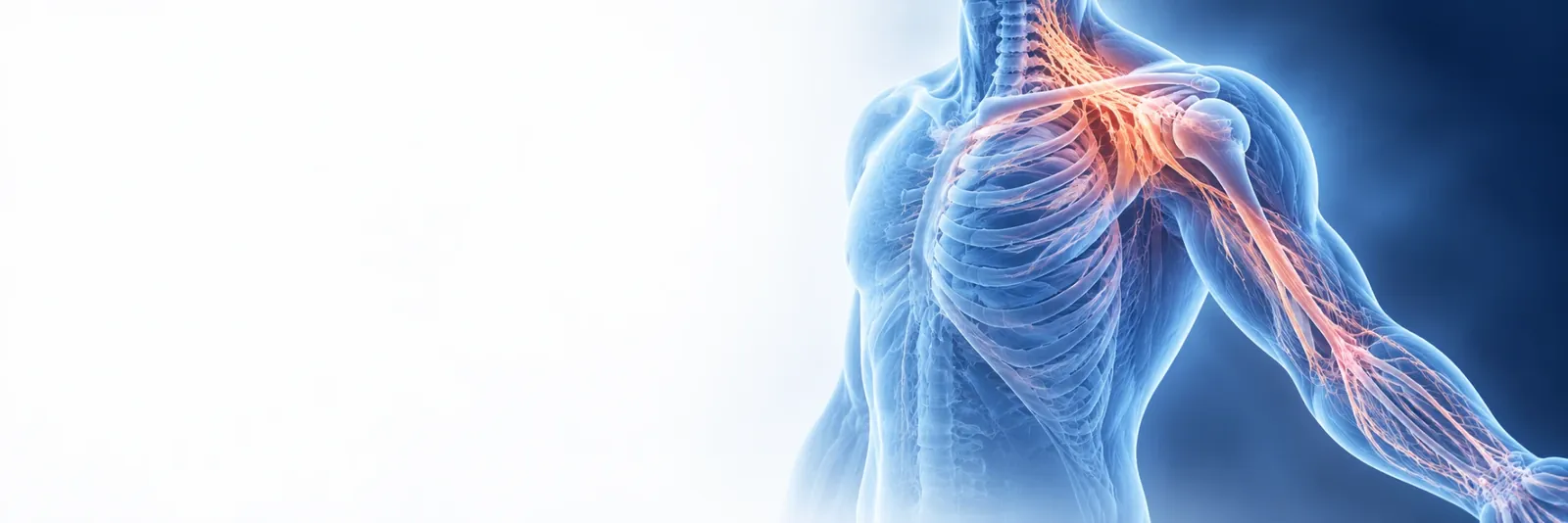
Peripheral nerve tumours are growths that arise from the nerves outside the brain and spinal cord. Most, such as schwannomas and neurofibromas, are benign, but they can cause a lump, shooting pain, tingling or weakness. The operation is done under magnification, with nerve monitoring, so that the tumour can be taken out while sparing as much nerve function as possible.
Who it may help
- A lump that is slowly growing near a nerve, sometimes with a tingling shock when pressed
- Pain, numbness or tingling in a limb
- Weakness or muscle wasting in the area supplied by the nerve
- Neurofibromatosis (NF1 or NF2)
- A scan showing a well-defined nerve tumour
Conditions treated
- Schwannomas
- Solitary neurofibromas
- Plexiform neurofibromas in NF1
- Malignant peripheral nerve sheath tumours, in coordination with oncology
- Rare nerve-related masses
- Recurrent or incompletely removed nerve tumours
Techniques used
- Microsurgical excision The tumour is carefully separated from the nerve fibres under a microscope.
- Nerve monitoring Electrical monitoring helps identify and protect working nerve fibres during the operation.
- Enucleation For schwannomas, the tumour can often be shelled out with little disruption of the nerve.
- Resection and grafting When the tumour involves the whole nerve, that segment is removed and the gap bridged with a graft.
- Neuroma surgery Treatment of painful scar-nerve tangles after injury or surgery.
Before the procedure
- MRI with contrast to show the size of the tumour and its relation to the nerve
- High-frequency ultrasound where useful
- A needle biopsy only when it is needed for the diagnosis
- Examination of strength and sensation
- A discussion of expected results and risks
Recovery: what to expect
- Most operations are day-care or need one night in hospital.
- A support or splint may be used temporarily when the tumour is in a limb or near a joint.
- Return to normal activity in about 1 to 2 weeks, depending on the site.
- Nerve function reviewed at about 1, 3 and 6 months.
- Physiotherapy if there was weakness or stiffness before surgery.
These are typical timings. Your own plan depends on your condition, your general health and the operation chosen, and Dr. Chakraborty will go through it with you.
Risks to know about
Every operation carries risk. The ones most relevant here are:
- New numbness or weakness in the area supplied by the nerve, which is usually temporary
- Pain or a tender scar
- Infection or bleeding
- The tumour coming back if it could not be removed completely
Your own risks depend on your health and your scans, and are explained in detail before you decide on anything.
Common questions
Are nerve tumours dangerous?
Most are benign and slow-growing. Malignant change is rare, but more likely in people with neurofibromatosis, so these are followed more carefully.
Will I lose feeling or strength?
The operation is designed to avoid this and most people keep their function, though some have temporary changes.
Is a biopsy needed?
Often not. Imaging is usually enough, unless a malignant tumour is suspected.
Can the tumour come back?
It is uncommon for schwannomas and solitary neurofibromas when completely removed. Follow-up is still advised.
This page is general information to help you prepare for a consultation. It is not medical advice and does not replace an examination. Every plan is made for the individual patient.