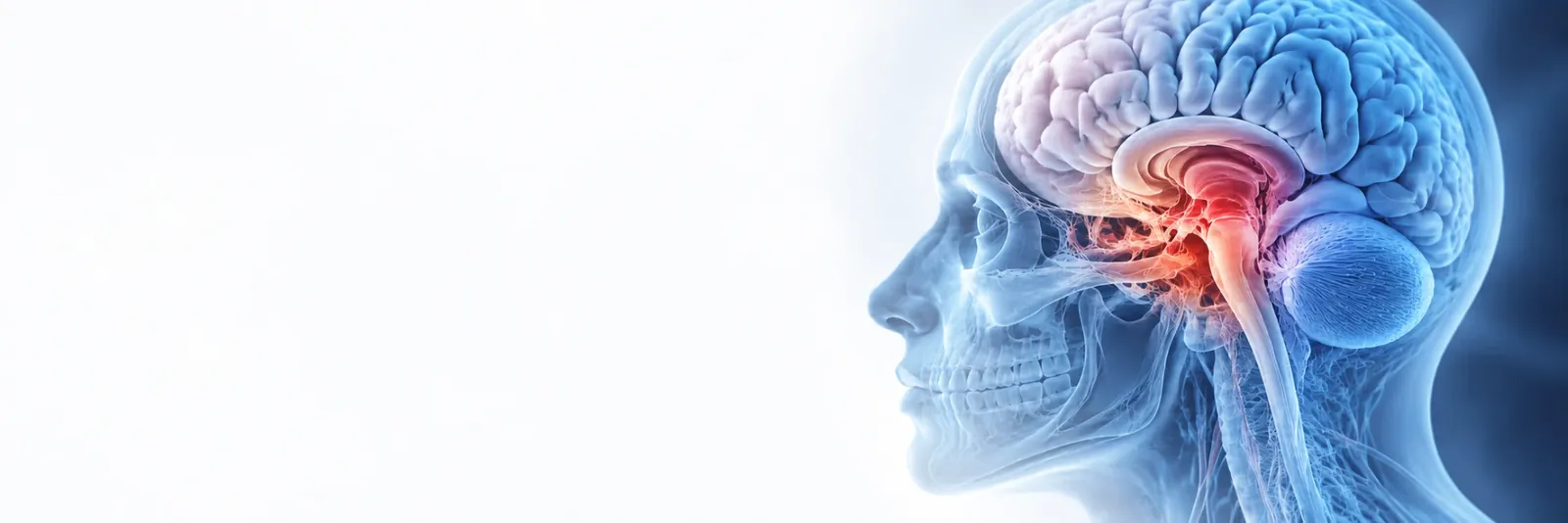
Endoscopic endonasal surgery reaches the underside of the brain through the nose. A thin camera (an endoscope) and fine instruments are passed through the nostril and the sinus behind it, so a tumour or a leak at the base of the skull can be treated without any incision on the face or scalp and without lifting the brain.
Who it may help
- A pituitary tumour or a cyst near the pituitary gland
- A tumour at the base of the skull in the middle of the head, such as a craniopharyngioma, a clival tumour or some meningiomas
- Vision that is slowly narrowing or blurring because a growth presses on the optic nerves
- Hormonal problems that point to a pituitary cause
- Clear fluid dripping from the nose after an injury or surgery (a cerebrospinal fluid leak)
Conditions treated
- Pituitary tumours
- Rathke’s cleft cysts
- Craniopharyngiomas
- Clival tumours, including chordomas
- Meningiomas of the front skull base
- Sinus tumours that have reached the skull base
- Cerebrospinal fluid leaks and skull-base defects
How the operation is done
- Planning MRI and CT scans are combined with a navigation system, which works like a map during the operation.
- Access The endoscope is passed through the nostril and the sphenoid sinus is opened to reach the skull base.
- Removal The tumour is separated from the surrounding structures and taken out in pieces with fine instruments.
- Repair If the thin lining of the brain has been opened, it is rebuilt with a graft so that fluid cannot leak.
Before the procedure
- Hormone blood tests if a pituitary tumour is suspected
- MRI and CT scans of the head and sinuses
- An ENT check of the nose and sinuses
- Eye and field-of-vision testing when the optic nerves are involved
- Anaesthesia fitness check
Recovery: what to expect
- Most people stay in hospital for about 2 to 3 days.
- The nose stays blocked for one to two weeks; avoid blowing it for two to three weeks.
- Hormone levels and scans are repeated during follow-up visits.
- Many people are back at desk work within two to four weeks, once the surgeon is happy with healing.
These are typical timings. Your own plan depends on your condition, your general health and the operation chosen, and Dr. Chakraborty will go through it with you.
Risks to know about
Every operation carries risk. The ones most relevant here are:
- A leak of brain fluid that needs a second repair
- Nosebleed or sinus infection
- Changes in pituitary hormones, which may need tablets for a time or for good
- Rarely, bleeding, meningitis or damage to the eye nerves
Your own risks depend on your health and your scans, and are explained in detail before you decide on anything.
Common questions
Will there be a scar or a shaved head?
No. Everything is done through the nose, so there is no mark on the face and no hair is removed.
Is it painful?
Mostly it feels like a heavy, blocked nose for a week or two. Headache is usually mild and is treated with ordinary pain relief.
Can every skull-base tumour be removed this way?
No. Very large tumours, or those that spread far to the side, may need an open operation. This is decided after looking at your scans.
What happens if the tumour grows back?
You will have regular scans. If it returns, options include a second operation or radiotherapy, depending on the tumour.
This page is general information to help you prepare for a consultation. It is not medical advice and does not replace an examination. Every plan is made for the individual patient.