
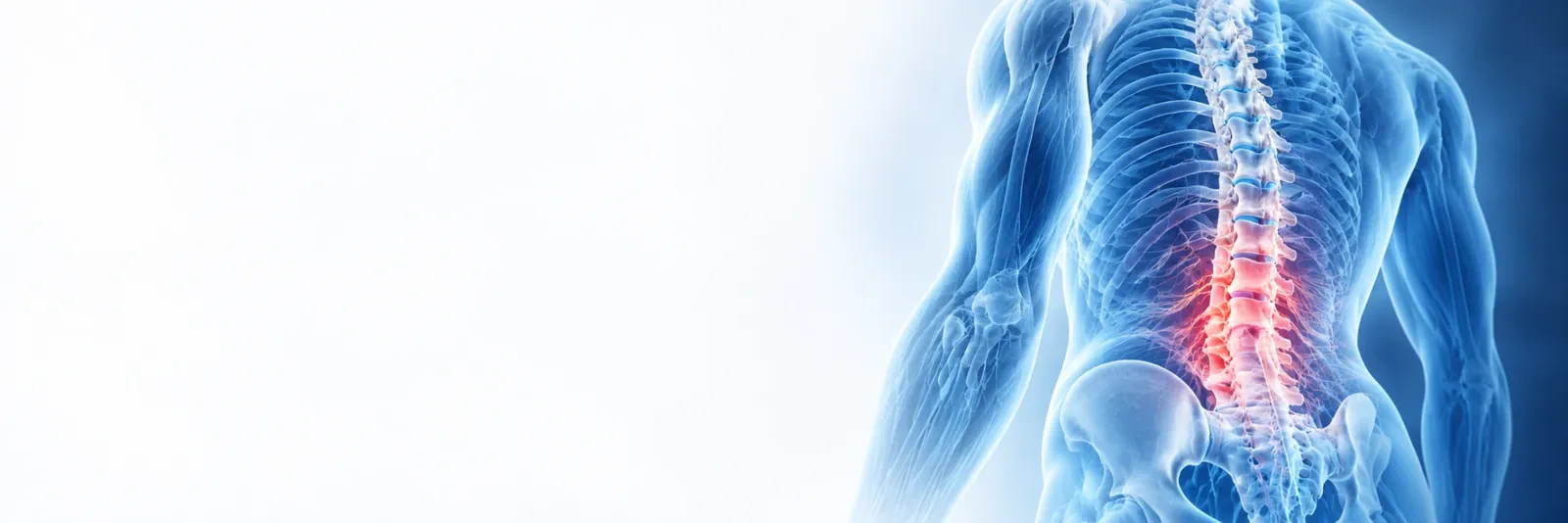
When a disc, a thickened joint or a narrowed canal squeezes the nerves in the lower back, the result is leg pain, numbness or weakness. In microscopic decompression the surgeon looks through an operating microscope to remove only the bone or disc that is pressing on the nerve. Where a segment of the spine is slipping or unstable, it is also supported with screws and rods.
Who it may help
- Back pain with pain, tingling or numbness spreading down the leg (sciatica)
- Difficulty walking far because of leg pain or heaviness
- Weakness of the foot or leg
- Symptoms that have not settled with rest, physiotherapy, medicines or injections
- Sudden loss of bladder or bowel control with numbness around the groin, which is an emergency (cauda equina syndrome)
Conditions treated
- Lumbar canal stenosis
- Disc prolapse pressing on a nerve root
- Degenerative spondylolisthesis (a vertebra slipping forward)
- Foraminal stenosis
- Facet joint arthritis
- Lumbar instability and some deformities
How the surgery is done
- Planning MRI and CT identify the level and the cause of the compression.
- Decompression Through a small incision, the microscope gives a magnified, well-lit view while the bone or disc pressing on the nerve is removed.
- Fixation, if needed Screws and rods hold an unstable segment steady while it heals. Not every patient needs this.
- Closure The muscle is closed in layers to help healing.
Before the procedure
- Blood tests and spine MRI or CT
- A discussion of your symptoms and the plan with the surgeon
- Anaesthesia fitness check
- Fasting for about 8 hours before surgery
- Admission the day before or on the day of surgery
Recovery: what to expect
- A hospital stay of about 2 to 4 days.
- You are helped to stand and walk within the first day or two.
- Stitches come out at around 10 to 12 days.
- Physiotherapy starts about 2 to 3 weeks after surgery.
- A lumbar belt may be advised for 4 to 6 weeks.
- Desk work is often resumed in 4 to 6 weeks; heavy physical work takes longer.
These are typical timings. Your own plan depends on your condition, your general health and the operation chosen, and Dr. Chakraborty will go through it with you.
Risks to know about
Every operation carries risk. The ones most relevant here are:
- Infection or a collection of blood at the wound
- A tear in the lining of the nerves, causing a fluid leak
- Leg numbness or weakness that does not improve, or a return of the pain
- Loosening of screws, or problems at the level next to the fusion in the long term
- Rarely, bleeding or blood clots
Your own risks depend on your health and your scans, and are explained in detail before you decide on anything.
Common questions
Is this a big open operation?
No. It is done through a small incision with the help of a microscope, so less muscle is disturbed.
Will the screws stay in forever?
Yes, unless there is a particular reason to remove them later. They are made to stay.
Will the pain come back?
Many people get lasting relief, especially with exercises and follow-up. Pain can return, which is why the rehabilitation plan matters.
Do I need a belt afterwards?
A lumbar belt is often advised for the first four to six weeks for support.
This page is general information to help you prepare for a consultation. It is not medical advice and does not replace an examination. Every plan is made for the individual patient.